
Vegetarian Ukrainian Borscht Made from Beet Kvass Beets (VIDEO)

Vegetarian Ukrainian BORSCHT

After the New Year, I like to return to simple, nourishing food — the kind that warms you, supports the body, and feels honest. This vegetarian Ukrainian borscht is exactly that.

What makes this borscht special is that it’s made using the fermented beets left after beet kvass. In Ukrainian kitchens, nothing was wasted. Fermentation wasn’t a trend — it was a way of life, especially during winter and fasting periods. Those deeply colored, gently sour beets still carry so much flavor, and they create a rich, comforting soup without meat.

This is not a “modern twist. ”This is a continuation of tradition.

Vegetarian Borscht with Dry Mushrooms, Beans, Fermented Beets & Kvass is fasting recipe, a memory of my mother, and a reminder that deep flavor begins at home.
How to Substitute Beet Kvass and Fermented Beets (If You Must)
Honestly, I don’t recommend substituting beet kvass or fermented beets in borscht. They bring a depth and natural fermentation that is difficult to replace.
That said, if you’re in a pinch, you can still achieve a delicious final borscht. Thanks to the umami flavor of dried mushrooms (which I do not recommend substituting with fresh mushrooms), along with tomato paste, fresh garlic, and dill, the distinctive Ukrainian flavor will still shine through.
Substitutions:
Fermented beets → Fresh beets. Use freshly grated or julienned beets and cook them gently to preserve sweetness and color.
Beet kvass → Beet juice + lemon juice. Use plain beet juice and add 2 tablespoons of fresh lemon juice to mimic the acidity and brightness of kvass.
While this version won’t have the same fermented complexity, it will still result in a balanced, comforting, and authentically flavored borscht.
Have you subscribed to my cooking channel? Go and click here to be the first to see my new videos and THANK YOU so much for subscribing. It means a lot to me!
In 2022, UNESCO officially recognized the Culture of Ukrainian borscht cooking as Intangible Cultural Heritage.
There is no longer a debate about whether borscht is Ukrainian — UNESCO recognizes the Culture of Ukrainian borscht cooking as part of Ukrainian culture and identity.
Borscht was never just soup in my mother’s kitchen either. It was a season, a mood, a ritual. In Ukraine, borscht is served everywhere — from daycare kitchens to the front line. That’s why every Ukrainian loves it.
Just as the French say there is wine, and then there is French wine, Ukrainians feel the same about borscht. There are many soups in the world — but there is borscht.
I am glad that borscht is now being taught and respected beyond Ukraine, even included in culinary programs in France.

My mom was a lifelong lover of borscht. No matter the time of year, there was always a pot on the stove or resting quietly, getting better with time. She believed—without ever saying it out loud—that borscht had a soul. You didn’t rush it. You didn’t overpower it. You listened to it.
Some days it was rich with meat, that has a bone, other days bright and green, and very often it was simple, fasting borscht, made with what the pantry offered: beans, dried mushrooms, potatoes, cabbage, and beets saved after making kvass. Nothing wasted. Everything respected.
Why Use Beet Kvass Beets in Borscht?
When you make beet kvass, the liquid becomes a probiotic drink — but the beets themselves are still alive with flavor. Slightly tangy, earthy, and softened by fermentation, they are perfect for borscht.
Using them:
adds depth without meat
naturally balances sweetness and acidity
honors no-waste Ukrainian cooking
makes the soup lighter but still satisfying
In many Ukrainian homes, vegetarian borscht was common during fasting seasons. Fermented vegetables helped build complexity when animal products were limited.

This vegetarian borscht is inspired by her way of cooking—layered, thoughtful, deeply savory, and nourishing. It is sour, sweet, earthy, and grounding. It reminds me that healthy eating doesn’t start with trends or restrictions, but with humble ingredients and attention in your own kitchen.
Why This Borscht Is Special?
Uses dry mushrooms for natural umami flavor
Includes fermented beets after kvass—a traditional, no-waste approach
Finished with beet kvass instead of vinegar alone for complexity
Balanced with honey, acidity, and spice
Completely fasting (пісний), yet deeply satisfying

Healthy eating starts simply — in your own kitchen, with basic ingredients, deep flavor, and respect for tradition — just like Ukrainian borscht.
Borscht will warm your body and steadies the mind.
Why Use Beet Kvass and fermented Beets in Borscht?
When you make beet kvass, the liquid becomes a probiotic drink — but the beets themselves are still alive with flavor. Slightly tangy, earthy, and softened by fermentation, they are perfect for borscht.
Using them:
adds depth without meat
naturally balances sweetness and acidity
honors no-waste Ukrainian cooking
makes the soup lighter but still satisfying
In many Ukrainian homes, vegetarian borscht was common during fasting seasons. Fermented vegetables helped build complexity when animal products were limited.

Its Sour • Sweet • Savory • Earthy
Borscht is often served with pampushky — soft Ukrainian yeast rolls brushed generously with garlic oil and herbs.

Warm and fragrant, pampushky are made for tearing, dipping, and sharing. They are not decoration; they are an extension of the borscht itself. Together, borscht and pampushky create the balance of sour, sweet, rich, and aromatic that defines the Ukrainian table.
Try This one with meat The Best Ukrainian Borscht

Or light green borscht where the main ingredients is sorrel

Let's do it...
Prep time:10 minutes
Cook time: 60 minutes
Rest time: 20 minutes
Total time: 1 hour 30 minutes
Author: Inna of innichkachef.com
Serves: 8-10 servings
Flavor profile: earthy, gently sour, comforting, winter-style
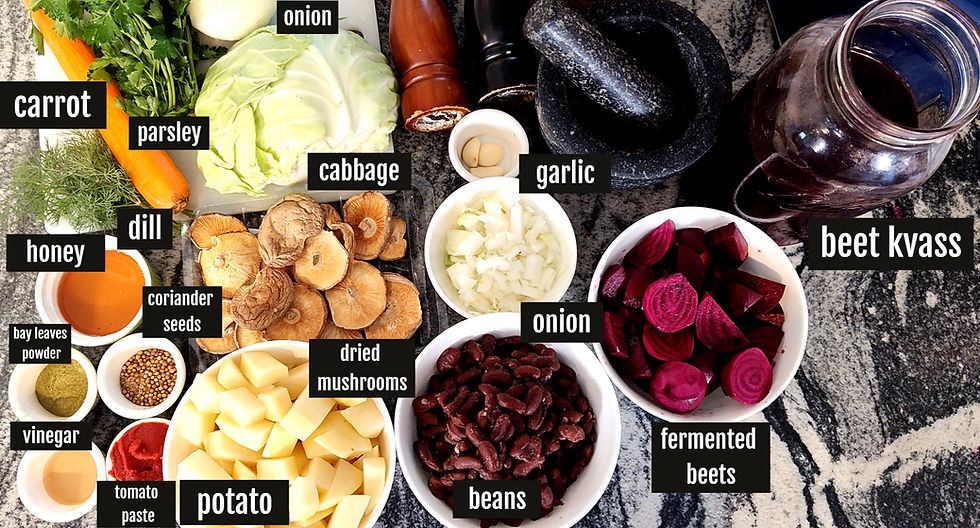
Ingredients for the borscht:
20–30 g (about 1 oz) dry mushrooms (porcini or shitakes)
2 liters (8 cups) water
1–1½ cups (1 can) cooked red kidney beans
1 teaspoon ground bay leaf
1/2 cup onions, chopped for the broth
2 medium Russel potatoes, diced
half of small head green cabbage, thinly sliced
6-8 tbsp sunflower oil or olive oil
1 medium onion, finely chopped for sauté with carrots
1 large carrot, grated or julienned
2 cups fermented beets (after making beet kvass), sliced
2 tablespoons tomato paste
1 tbsp apple cider (homemade apple cider vinegar)
1–2 tsp honey (to taste)
2 cups beet kvass (to taste)
Salt & freshly ground black pepper
1 table spoon of coriander seeds (optional)
1 table spoon of dill seeds (optional, I didn't use this time)
Pinch of Celtic coarse salt
2–3 cloves fresh garlic, grated
Ingredients for the serving Borscht:
Fresh chopped dill
sour cream or creme fraiche
few cloves of raw garlic
Directions for the Borscht:
1. Build the Mushroom Broth (Flavor Foundation)
Rinse the dried mushrooms briefly to remove any grit. Place them in a pot or Dutch oven with 8 cups of water. Cover and gently simmer for 20–30 minutes. This step creates the earthy, savory foundation of the borscht.
Remove the mushrooms from the broth. Let them cool slightly, then chop them finely. Return the chopped mushrooms to the pot along with:
½ chopped onion
1 teaspoon ground bay leaf
1 teaspoon salt
Cover and continue simmering gently.
2. Make the Zasmazhka (The Heart of Borscht)
Heat 2 tablespoons sunflower oil (traditional aroma) or olive oil in a wide pan over low–medium heat.
Onion first — always. Add the chopped onion with:
1 teaspoon salt
Freshly ground black pepper
Cook slowly for about 5 minutes, until soft and lightly golden (not browned). This builds natural sweetness.
Add the grated carrot and cook 3–4 minutes, stirring occasionally, until softened and fragrant.
Add the zasmazhka to the soup pot. Continue simmering gently.
Add chopped potatoes to the pot. Keep the heat low — simmering, not boiling, is key to good flavor.
3. Sauté the Beets (Color, Sweetness, Balance)
Cut the beets into matchsticks or grate them.
Heat 2 tablespoons oil in a pan. Add the beets and cook for a few minutes, then season with:
Salt and pepper
Honey (balances acidity)
Vinegar (added last to lock in color)
Stir well and cook gently 5–7 minutes, until the beets soften and flavors round out.
Add everything to the soup.
4. Tomato & Cabbage
Dissolve tomato paste in 1 cup hot water and stir until smooth. Pour into the pot.
Add sliced cabbage and stir well. It may look like a lot at first — don’t worry, it will cook down.
Cover and simmer gently for 20 minutes.
5. Finish with Beet Kvass
Pour in beet kvass gradually, starting with 2 cups. Taste and adjust salt, sweetness, or acidity as needed.
6. Final Step — The Old Way
Add pre-cooked red kidney beans and stir.
Using a mortar and pestle, grind:
3 cloves garlic
Coriander seeds
Dill seeds
A pinch of coarse salt
Stir this mixture into the borscht after turning off the heat.
Add chopped fresh dill and parsley, cover, and let rest 20–30 minutes.
This final step gives warmth, aroma, and deep savory character — never sharp, never heavy.
Before serving, taste one last time and make final adjustments with salt, pepper, or vinegar if needed.
How I Like to Serve and Eat my Borscht
Borscht is best enjoyed simply, letting each traditional element shine.
I always serve it with fresh dill and sour cream — optional, of course, if you prefer to keep the dish on the vegan side.
On the side, rye bread or pampushky are a must.
My favorite way to enjoy the bread is to toast it lightly, then rub it with a clove of raw garlic. This aromatic, garlicky bread gives you a truly authentic borscht experience.
If you want to go completely traditional, eat a small piece of raw garlic, alternating bites of borscht and bread. Simple, bold, and incredibly satisfying — yummy.
A Note on Fasting & Flavor
In Ukrainian cooking, fasting food was never about deprivation. It was about clarity of flavor. Beans replace meat. Mushrooms replace bones. Fermentation replaces excess salt or fat. This borscht proves that fasting food can be rich, grounding, and deeply nourishing.
Final Thought
This pot of borscht is my quiet thank-you to my mom. For teaching me that food can be wisdom. That feeding people is an act of love. And that the deepest flavors come from patience, memory, and respect for ingredients.
May this borscht warm your kitchen the way it warmed ours. 💛🇺🇦
I hope you'll make this recipe soon. If you do, please tag me #innichka_chef on Instagram, Facebook, Patreon or Pinterest.

Excelente receta que mantiene viva la tradición ucraniana con ingredientes naturales y auténticos. lotería nacional también reúne personas, pero compartir recetas familiares fortalece cultura, historia y momentos especiales alrededor de la mesa.
Mình có lần lướt đọc mấy trao đổi trên mạng شيخ روحاني thì thấy nhắc nên cũng tò mò mở ra xem thử cho biết. Mình không tìm hiểu sâu جلب الحبيب chỉ xem qua trong thời gian ngắn để quan sát bố cục جلب الحبيب cách sắp xếp شيخ روحاني các mục và trình bày nội شيخ روحاني dung tổng thể. Cảm giác là các phần được trình bày khá gọn, các Berlinintim mục rõ ràng nên đọc lướt cũng không bị rối Berlinintim với mình như شيخ روحاني vậy là đủ để nắm tin cơ bản rồi. جلب الحبيب
😍
En testant plusieurs environnements de jeu en ligne, j’ai remarqué que la stabilité de l’interface est souvent plus importante que les éléments visuels ou les fonctionnalités mises en avant. Une plateforme peut sembler attrayante au premier contact, mais si les transitions sont irrégulières, l’expérience perd rapidement en confort. Dans mes essais comparatifs, j’ai également consulté Vegas Plus afin d’évaluer différentes structures de navigation et leur cohérence globale. Ce que je cherche désormais, c’est une continuité fluide entre les sections, sans coupures dans les interactions. Une interface stable et prévisible reste, selon moi, le facteur principal qui améliore la durée et la qualité de l’utilisation.
This reminded me how much I prefer simple and clean experiences online. Not everything needs to be complicated to be enjoyable. I came across PlayVio during a quick search, and it felt easy to get used to. It’s perfect for those moments when you just want something light.
really helpful post, i often use instagram downloader tools to save useful reels for offline use